
Across the animal kingdom, the life cycle of animals is extremely varied. While some animals have to find food for their young, others naturally produce it. While some animals are hatched from eggs, others come straight into the world.
Today, we’re going to take a look at the life cycle of mammals and how their unique adaptations and life cycle have allowed them to thrive across the globe.
What are mammals?
Mammals are a diverse class of animals which are connected through a few traits. Firstly, every mammal from the Etruscan shrew (Suncus etruscus) to the blue whale (Balaenoptera musculus) has hair or fur somewhere on its body; in the case of the blue whale, this is in the form of vibrissae (whiskers), like a cat! In fact, only humans (Homo sapiens) and a handful of other mammals don’t possess whiskers.
Secondly, mammals are all warm-blooded. This adaptation has allowed mammals to thrive in diverse environments across the world; however, it comes at a massive energy cost, leading to a higher demand for food to maintain core temperature. This energy cost is so high that during cold weather, some species of small birds, like goldcrests (Regulus regulus), can lose up to 5% of their bodyweight overnight from burning through energy reserves.
And of course, all mammals produce milk. Milk is a highly nutritious liquid secreted by mammary glands. It contains water, fat, protein, lactose (milk sugar), and essential vitamins and minerals, and is used to feed young mammals nutrient-dense food in the first stages of their life. Every single one of the over 5,000 species of mammals produces milk.
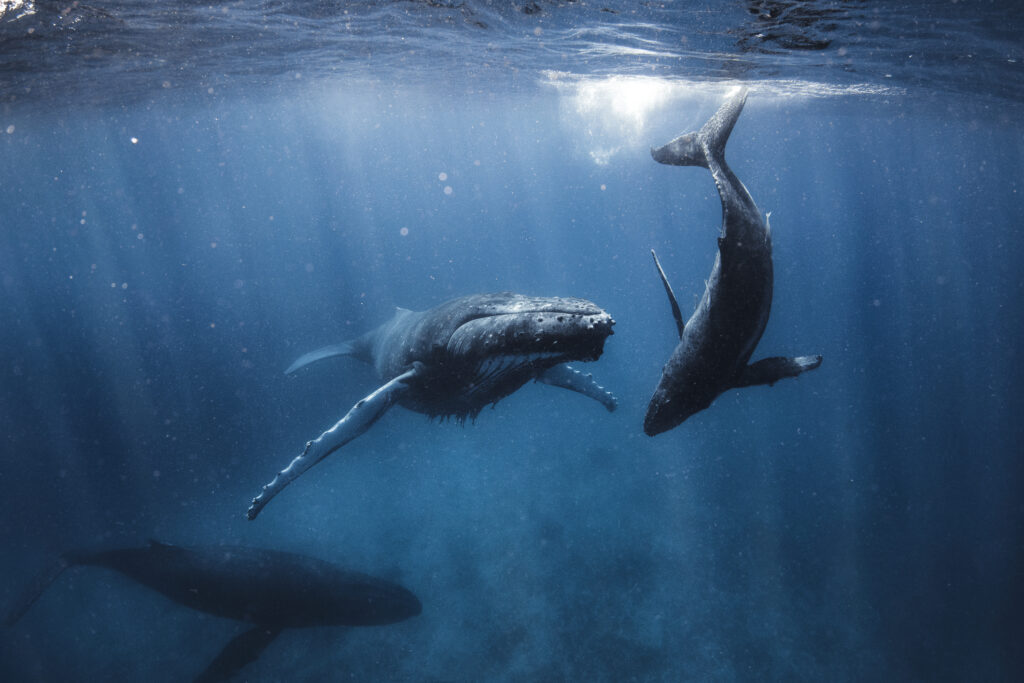
There are also three unique bones in the inner ear that set mammals apart from other animal classifications: the malleus (hammer), incus (anvil), and stapes (stirrup). Their primary advantage is impedance matching, or put simply, they amplify sound vibrations and focus them, allowing the delicate, airborne sound waves hitting the eardrum to transfer into the fluid-filled inner ear without losing energy.
For more fascinating facts about mammals, check out our blog all about them!
What is the life cycle of a mammal?
Unlike animals like lizards and most fish, mammals almost exclusively give birth to live young; this adds an extra layer of protection from the mother before they’re exposed to the world.
Pregnancy
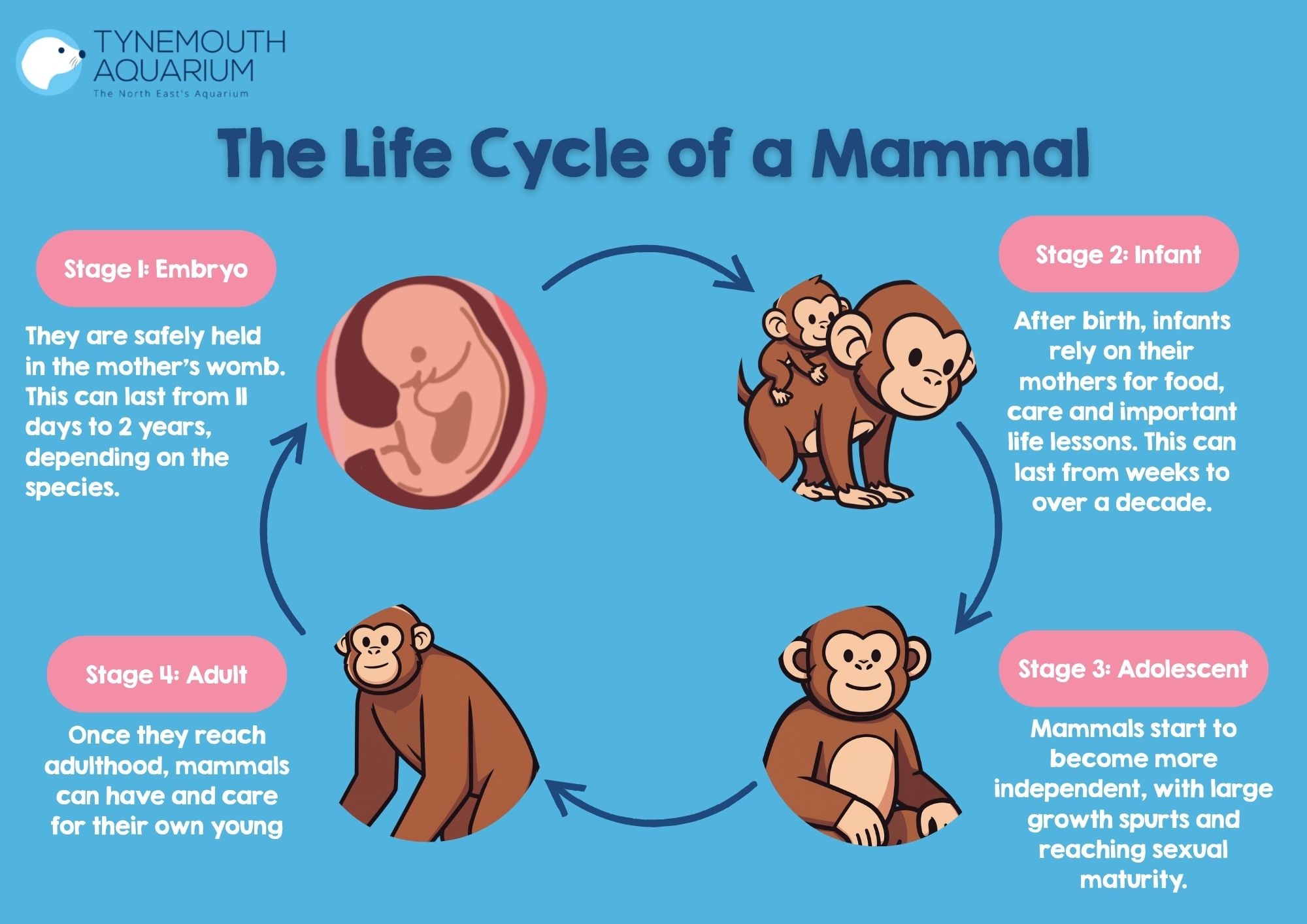
During the earliest stages of a mammal’s life, they are safely held in the mother’s womb. This stage lasts between 11 days and 2 years, depending on the size of the mammal. During pregnancy, a mammal goes from just two cells into a whole animal. This is the life stage that features the most growth and change throughout their life cycles.
Young
Once the mother has given birth, the young animal is still heavily reliant on its mother. Not only is food supplied directly by them through milk, but they also rely on their parents for protection and education. This period varies widely between mammals, depending on the lifespan of the animal.
Adolescence
During adolescence, animals become slightly more independent, relying far less on their parents and learning for themselves. This is the life stage where large growth spurts happen, taking mammals from young animals into adulthood. A key part of that is the mammals reaching sexual maturity, the stage when they can restart the cycle again.
Adult
As adults, mammals have reached their full size, and they will now usually be in a position to rear their own young. This is generally the longest stage of a mammal’s life; for example, a chimpanzee (Pan troglodytes) reaches adulthood between 13 and 15, but might live until it is 50 or 60.
Life cycle of a mammal diagram – free download!
For a visual guide to aid you in learning about a mammal’s life cycle, download our FREE Life Cycle of a Mammal Diagram.
Do mammals lay eggs?
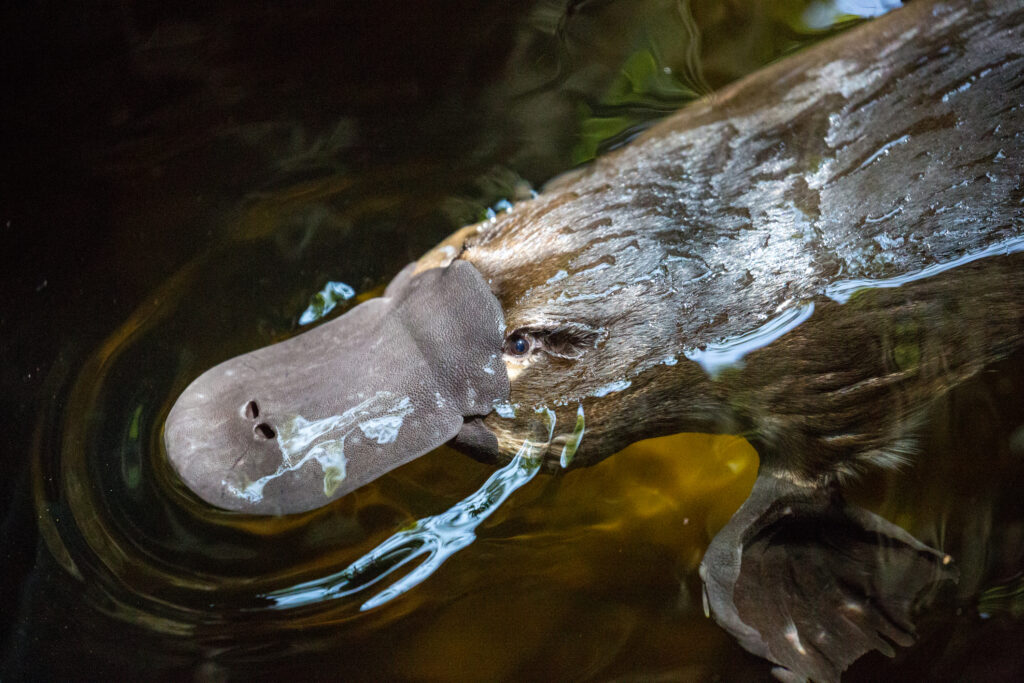
While most mammals have evolved to give birth to live young, one group of mammals did not: monotremes. This order of animals contains only five species, including echidna and the duck-billed platypus, but that doesn’t make them any less of a mammal – they still produce milk, have warm blood and have fur/hair.
Monotremes, unlike other mammals, do not have nipples for their young to get milk; instead, the milk is directly secreted from their skin. Young monotremes get their milk by licking the skin and fur.
Learn more about mammals at Tynemouth Aquarium
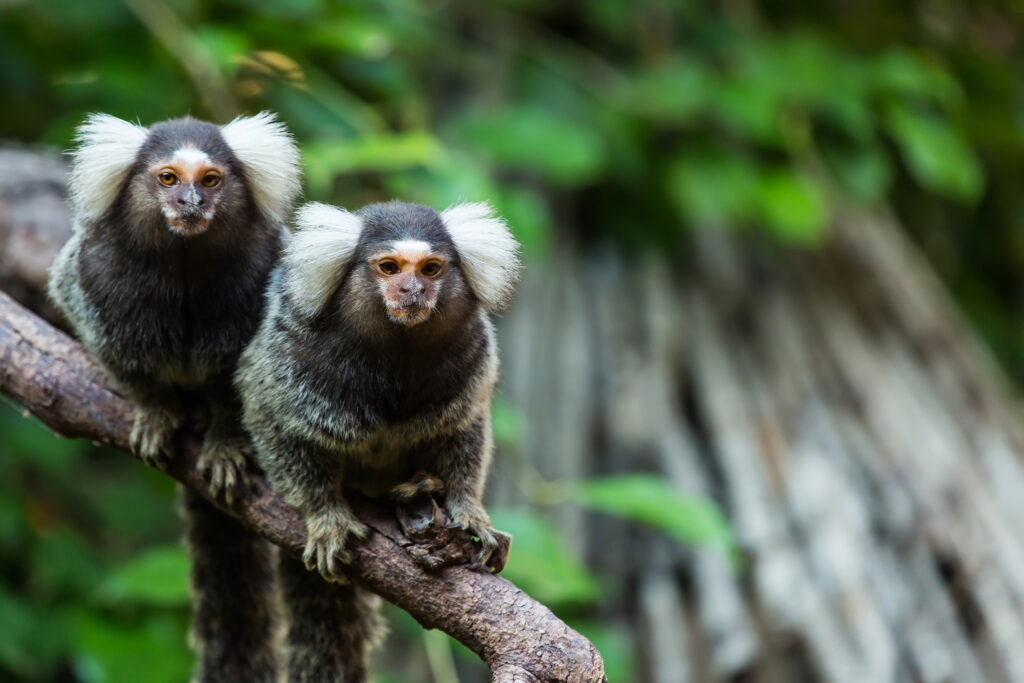
At Tynemouth Aquarium, we love all types of animals, so our aquarium isn’t just fish. We’ve also got a special Amazing Amazon enclosure for common marmosets (Callithrix jacchus) and our incredible Seal Cove exhibit, which is home to our herd of harbour seals (Phoca vitulina).
Our aquarium is an ideal place for people of all ages to learn about mammals and their life cycle. Our team of animal experts are always on hand to answer questions alongside their regular talks. School trips regularly benefit from the expertise on hand, allowing children to learn in a way that is fun and interactive.
Even if you’re not with a school, there’s still more than plenty to learn and experience at Tynemouth Aquarium. If you’d like to learn more about the mammals in an environment that mimics their natural habitat, book your tickets now.