
Thousands of species co-exist on land and in our oceans. While some may never meet, others will regularly interact with each other in different ways. These relationships can be simple or complex depending on factors such as diet, habitat, and, for many, survival.
In this guide, we’ll be exploring symbiotic relationships, the different types and examples of species that form these attachments.
What is a symbiotic relationship?
Symbiosis simply refers to a long term relationship between two species. Some relationships keep species alive, while others protect them from predators. Meanwhile, some symbiotic relationships exist to provide very different benefits for both species.
Regardless of whether species are benefiting from the relationship, these interactions between species are crucial for maintaining ecological balance, shaping the food chain and protecting biodiversity.
Symbiosis ultimately plays an important role in evolution since it determines which species have qualities that not only help themselves survive, but could also harm or benefit other species and improve their survival rate.
Types of symbiosis
The four main types of symbiosis are mutualism, commensalism, parasitism and competition. Here, we’ll delve into what each one means and how it works.
Mutualism
The clue is in the name for this one – mutualism means the relationship is mutually beneficial for both parties. Essentially, one species helps the other in exchange for something that helps them in return.
The benefits usually include factors like food, protection and shelter.
Commensalism
If two species interact without benefiting one another, this is known as commensalism. One species might use the other for shelter, transport or food, but they won’t help or harm the other species in the process.
Parasitism
Not all symbiotic relationships are good – and parasitism is the perfect example of this.
With this relationship type, one species acts as the parasite, which then benefits at the expense of the other species, known as the host. The parasite will use the host species for its own survival while actively harming the host. It might live on or in the host, commonly biting or feeding on them.
While the parasite doesn’t usually kill the host directly because it relies on it for its own survival, it can pass on life-threatening conditions which may eventually be fatal.
Competition
Two species might also compete for food or space, causing them to interact in close proximity.
This type of symbiosis can be intraspecific or interspecific. Intraspecific competition means that two creatures from the same species are competing for resources, while interspecific competition occurs between creatures belonging to different species.
Symbiotic relationship animal examples
Not all creatures in our oceans form symbiotic relationships, so let’s take a look at a few examples of some that do and how they interact.
Clownfish and sea anemones
Arguably made famous by Pixar’s Finding Nemo, clownfish (Amphiprioninae)and sea anemones (Actiniaria) have a mutualistic symbiotic relationship. Clownfish offer leftovers and scraps to the anemone, and in return, anemones offer protection and shelter within stinging polyps, which the clownfish is immune to thanks to a special layer of mucus. A win-win situation for both!
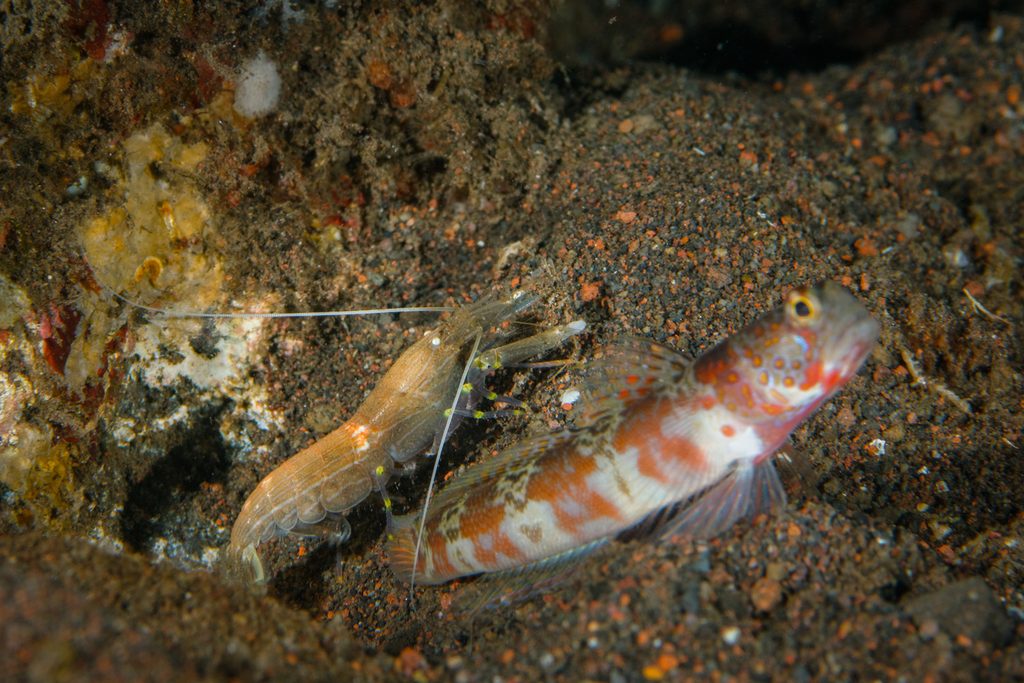
Goby fish and pistol shrimp
Goby fish (Gobiidae) have excellent eyesight, while pistol shrimp (Alpheidae)have poor vision. Because of this, the two species have developed a mutually beneficial relationship, so when the pistol shrimp is digging a safe burrow with its claws, the goby fish can keep watch for predators and keep both species safe.
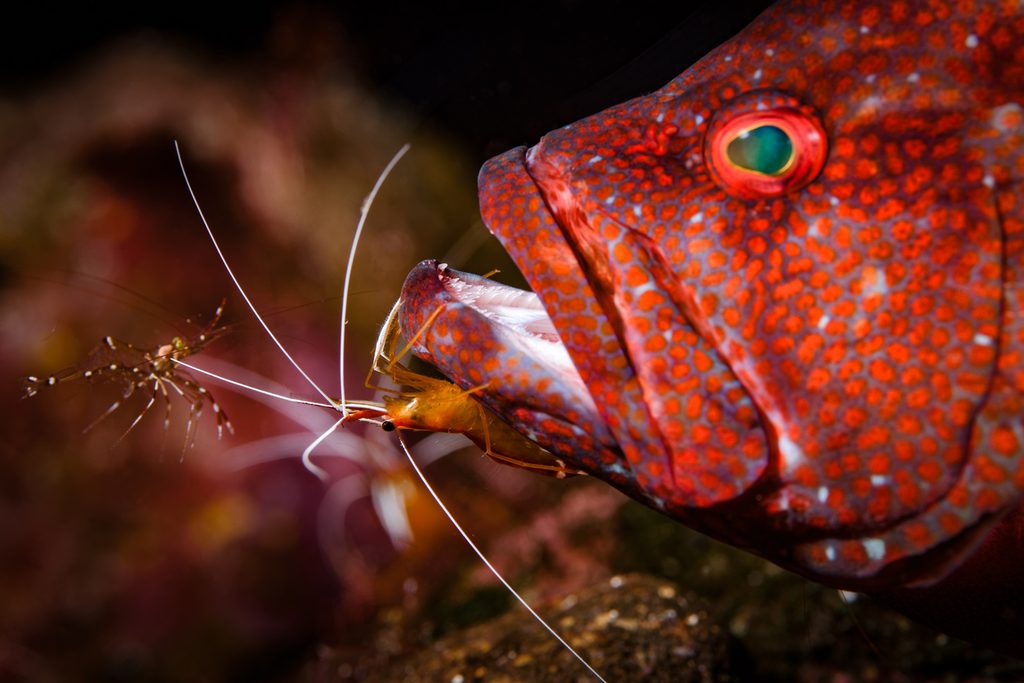
Cleaner shrimp and fish
Cleaner shrimp (Lysmata amboinensis) have a mutualistic symbiotic relationship with many species of fish found on coral reefs, including coral itself. This shrimp species performs a swaying dance to let other fish know they’re ready to ‘clean’, which means they’ll eat bacteria, dirt and even parasites found on other fish. This helps the other fish stay healthy, while providing essential nutrients for the cleaner shrimp.
/
Coral and algae
One of the oldest known symbiotic relationships still found on Earth is between coral and algae. This is an example of mutualism – the coral provides shelter for algae, while the algae provide the colour to the coral reefs and both support one another with nutrients.
The symbiosis between coral and algae is also an indicator of ocean health. As the oceans are heating up due to global warming, a process called coral bleaching occurs. This means the coral expels the algae, turning the coral white and breaking off the relationship between the two species in the process. The pairing of the two species indicates a healthy ocean environment.
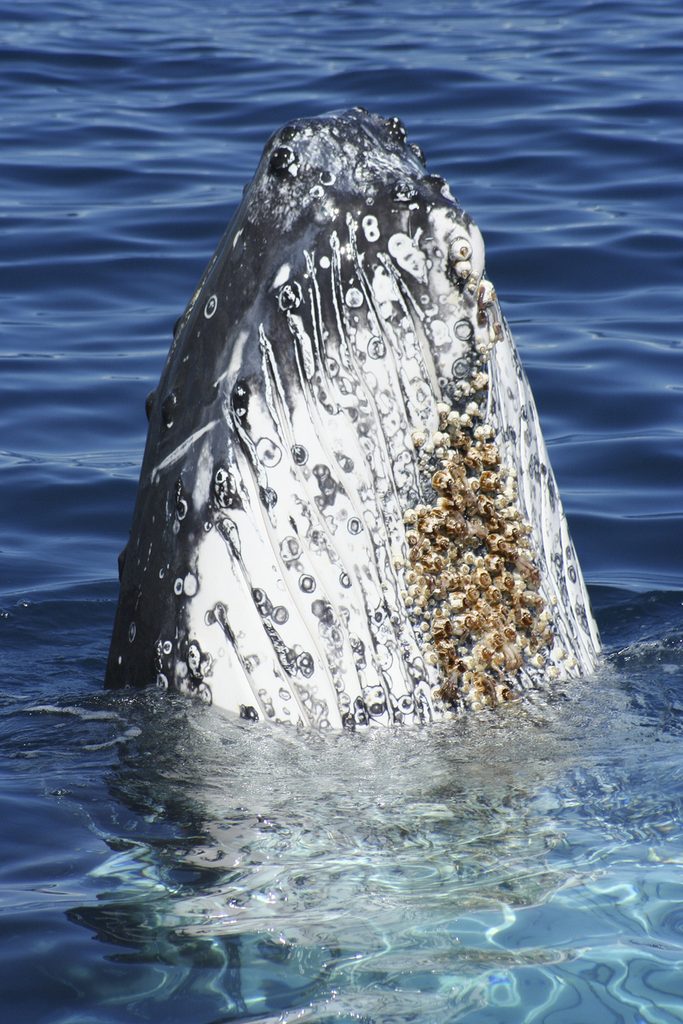
Barnacles and whales
Barnacles (Cirripedia) and whales have a commensal relationship. Both species primarily eat plankton, but barnacles are tiny and struggle to travel long distances. So, they use the giant size of whales to their advantage, hitching a ride to areas with plenty of food for both species without really affecting one another in the process.
Tick and mammal
Ticks (Ixodida) are common parasites for all mammals, whether that be on land or in water. In order to survive, grow and reproduce, ticks must feed on the blood of mammals, often hurting the host in the process. They will attach themselves to the skin of the mammal but might move from host to host to find the best source of nutrition. Because of this, they can sometimes pick up diseases or infections which they might pass on to the host.
Learn more at Tynemouth Aquarium
Symbiosis might be happening deep in the oceans, but that doesn’t mean it’s the only place you can witness it for yourself. Our exhibits here at Tynemouth Aquarium feature several exciting species taking part in this process right before our eyes, so if you’re interested in learning more about how it works for species such as clownfish and cleaner shrimp, book your tickets in advance for your next visit!