Seals are among the most beloved animals found in Britain’s waters. But we’re guessing you’ve never given much thought to their life cycle – from cute little pups to strong, seafaring adults.
Join us as we explore the fascinating life cycle of UK seal species, specifically harbour and grey seals. We’ll show you how they go from pup to adult, and give you some surprising facts about their habits and development.
Key life cycle in a seal’s development
As a seal pup grows, it goes through several stages of development. The first is nursing and weaning by its mother, followed by a juvenile stage where it learns independence. Then comes adulthood, a time when seals look to mate and make pups of their own.
Let’s take a closer look at these life cycle stages.
Pup nursing and weaning
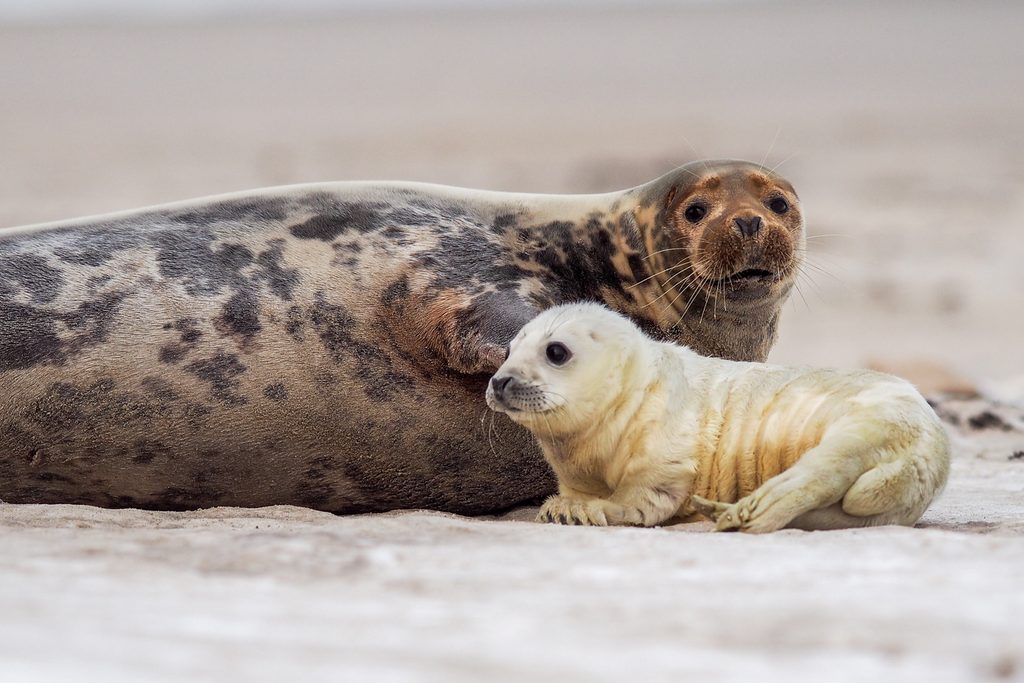
Aside from the constant risk of predators, life’s pretty sweet for baby seals. Their mothers provide high-fat milk that helps them grow and gain the blubber they’ll need to survive in cold waters. Interestingly, the mothers can leave the pups for up to 36 hours on the beach as she goes out to feed. This can cause a common issue as many people believe the pups have been abandoned and disturb them, which then can actually lead the mother to abandoning them.
It’s thought that healthy seal pups grow by up to 2kg per day in these early weeks, equivalent to a bag of sugar every 24 hours. They’ll need as much blubber as possible since it acts as insulation and an energy reserve as pups transition to the next phase of life.
How long a pup nurses for depends on the type of seal you’re talking about. Grey seals wean their young for 2-3 weeks, while harbour seals nurse for 4-6 weeks. In either case, it’s a short timespan that reflects just how fast seal pups grow and develop.
Juvenile
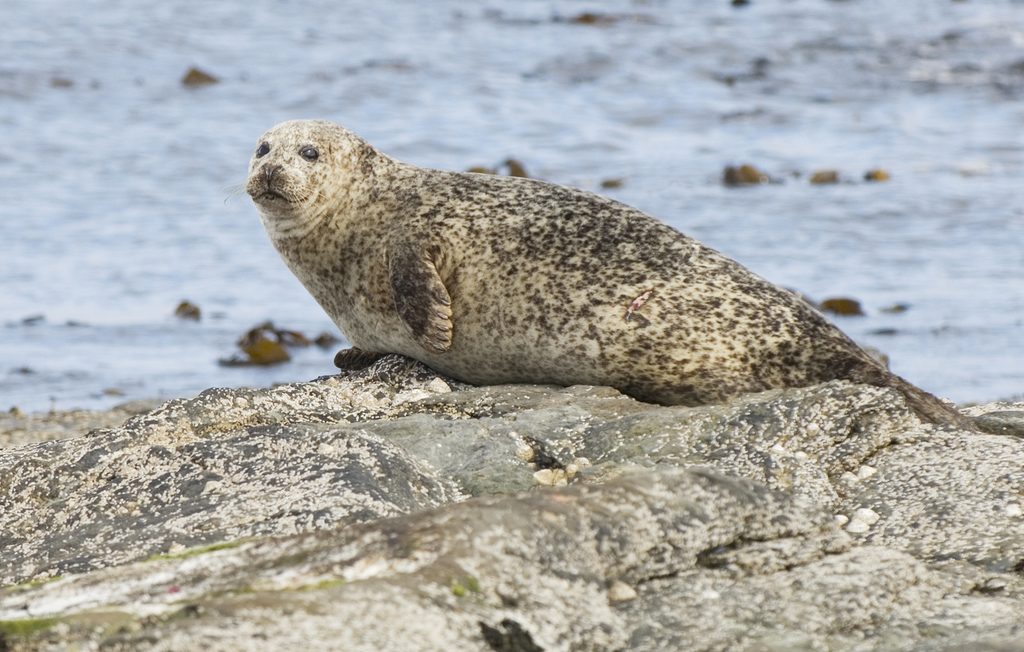
The juvenile stage of a seal’s life comes between weaning and adulthood. This is a time of huge change for young seals, as they become independent, learn to hunt and spend more time in the sea.
You may want to cover your ears for this next part, because the juvenile stage is when a seal’s mother leaves and they must fend for themselves. With no more high-fat milk to nurse on, seals switch to solid foods, which means venturing into the sea and learning to hunt.
While young seals innately know how to swim, hunting takes a little practice. They learn partly by trial and error and partly by watching others. There’s a lot to master – from approaching fish without scaring them off to handling different types of prey.
How long the juvenile phase of a seal’s life lasts is tricky to define, and it depends on the individual. It lasts until an animal reaches sexual maturity, which is roughly 4-6 years for females and 6-8 years for males. That’s one of the key differences between seals and sea lions, as they reach adulthood faster.
Adulthood
When a seal reaches adulthood, that’s when it’s capable of having pups of its own. At this point, they’re fully developed and spend most of their time in the sea, only coming ashore to breed, rest and moult.
Adult seals are amazing swimmers, with the thick layer of blubber they gained as pups helping them spend hours in the sea at a time. They’ve evolved to survive in the harshest conditions, with streamlined bodies and excellent eyesight making them supreme underwater hunters.
Seals have a surprisingly long average lifespan, with grey seals expected to live 30-35 years and harbour seals 20-30. They don’t stop reproducing until well into later life, with females rearing 15+ pups in their lifetime.
Gestation and birth
Female seals are pregnant for 11 months, though not all of this time is spent with a growing embryo. Seals have evolved to delay the implantation of fertilised eggs so that they give birth at the right time of year, avoiding conditions that would make nursing difficult.
So, while adult seals mate in the autumn, the embryo doesn’t start developing for several months. Fertilised eggs are stored in “blastocysts” and are later implanted in the uterus, where rapid foetal growth begins.
Seal pups grow to around 8-12kg and are around 75-100cm at birth. During this time, females eat up to 7kg per day to support their baby’s development – that’s equivalent to the average aircraft cabin bag!
Five quick-fire facts and FAQs about the life of a seal
By now you should have a pretty solid understanding of a seal’s life cycle. But have you ever considered why baby seals are called “pups”? Or what happens when they moult? Then it’s time for some fast facts…
What are baby seals called?
Baby seals are known as pups. But have you ever asked why?
Pup might not seem the most obvious name for a baby seal. But there’s actually a scientific reason behind it – not just because it sounds cute.
Seals belong to the “Caniformia” suborder of carnivores, so they’re distant cousins to bears and dogs in evolutionary terms. That’s why we use pup for their young.
There are more clues to the term’s origins, too.
For instance, did you know that seal translates to “sea dogs” in some languages? Then, there’s the babies themselves, which are known for their bark-like yaps and yelps.
What does a grey seal pup look like?
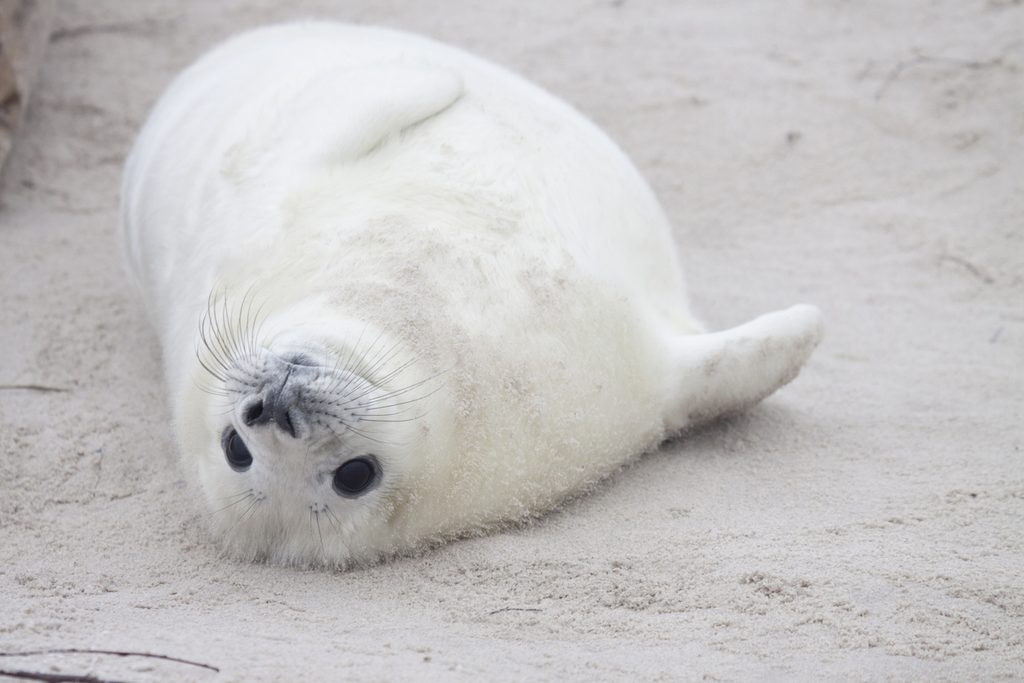
Aside from extremely cute? Seal pups are plump, fluffy and sausage-shaped, with large dark eyes in the middle of their face.
When grey seal pups are born, most are white or cream in colour. That’s due to a thick layer of baby fur called a “Lanugo”, which keeps them warm until they’ve piled on the blubber.
As mentioned earlier, even newborn pups are surprisingly big, measuring up to three feet in length. They start shedding their Lanugo coat after 3-4 weeks, replacing it with sleek grey or brown fur that helps make them more streamlined for swimming.
When do seals have pups?
In the UK, seals give birth at different times depending on the species.
Harbour seals give birth in the summer months, usually around June and July. Meanwhile, grey seal pups usually arrive somewhere between August and January, depending on the conditions the previous year.
Do seals abandon their pups?
Abandon is a strong word. But yes, seals do leave their young to fend for themselves when they’ve reached adolescence.
When seals have finished nursing, they must take their first steps towards independence. By that time they’ve already learnt all they can from their mothers, and must rely on their instincts to survive.
What is seal moulting?
After shedding their Lanugo as pups, seals moult annually to replace fur that’s become damaged on rocks and by exposure to seawater and bacteria. That’s why seals often look far from their best when you spot them lounging on the beach at certain times of year.
Moulting is a super-important part of a seal’s healthy lifecycle. Shedding old fur and skin removes harmful parasites, while the new coat means better insulation and warmth in the sea.
Supporting seal conservation and development at Tynemouth Aquarium
Tynemouth Aquarium is proud to play its part in seal conservation, with our designated Seal Hospital offering a sanctuary for pups and adults in need. Working closely with wildlife rescue partners, we rescue seals that are injured or underweight, nursing them back to health before returning them to the wild.
The Seal Hospital sees a lot of pups through its doors. Our welfare team provides specialist care and support to these struggling infants, ensuring they get the nutrition they need to build strength and gain their independence.
If you’d like to learn more about seals and the conservation efforts of our dedicated team, book your visit to Tynemouth Aquarium. Several areas in our dedicated Seal Hospital are on public display, so you can enjoy a close encounter with the lovable creatures in our care.